It sounds so simple, doesn’t it? “Just sit and breathe,” they say. But for some reason, that doesn’t feel so simple after all.
Maybe you’ve tried it and thought, “My mind won’t stop,” or “I can’t sit still for that long.” That’s totally normal — we all feel that way at the beginning.
The truth is, meditation isn’t about stopping your thoughts or forcing your mind to be calm. It’s about changing your relationship with your thoughts — approaching them with more awareness, kindness, and patience.
And the benefits you get from meditation — less stress and anxiety, better sleep, and feeling more grounded in your day-to-day life — are well worth the effort.
But you have to know what you’re doing.
In this post, we’ll go over:
-
What meditation really is (and isn’t)
-
The right way to start so you actually stick with it
-
Mini-meditations you can sprinkle throughout your day
-
Common mistakes to avoid
What Meditation Really Is (and Isn’t)
Meditation is the practice of training attention and awareness.
It brings you into the present moment and teaches you how to be aware of your thoughts, feelings, sensations, and surroundings — without getting caught up in them.
In other words, meditation trains the mind to be present.
Here’s what meditation is not:
It’s not about getting rid of thoughts or forcing your mind to be calm.
You will have thoughts during meditation. You’re human. The practice is about noticing when your mind wanders and bringing your attention back to the present.
It’s not a religious practice.
Meditation can be completely secular. There’s no need to get caught up in any belief system if that’s not your thing. Meditation is not religious unless you want it to be.
It’s not about sitting perfectly still for hours on end.
The beauty of meditation is that you can do it anywhere, anytime, for however long you want. Even two minutes a day can make a difference.
You don’t have to be “good” at it either.
You might expect meditation to feel calm and peaceful. Sometimes it will — but other times you’ll be restless and distracted.
There’s no scorecard for meditation. Even the sessions where your mind wanders every two seconds are still beneficial.
Think of it this way: meditation is like weightlifting for the mind. Every time you notice you’re thinking and bring your attention back to the present moment, you’re doing a “rep.” The more you practice, the stronger your attention and patience muscles become.
When you start, you might hear a little voice in your head saying, “Wait. You can’t just sit here doing nothing.”
But after a while, that voice gets replaced by another one — a voice that says, “Hey, you should probably sit down and meditate for a few minutes.”
Sound good? Great. Let’s get to it.
How to Meditate Properly
Step 1: Find Your Why
Before you even sit down to meditate, it helps to know why you want to do it.
Do you want to feel less stressed and anxious? Sleep better? Focus more in your daily life? Gain more patience?
Identifying your reason for meditating helps you stay motivated and gives your practice direction.
Meditation has many benefits — lower stress levels, improved mood regulation, greater clarity, and more resilience to daily stressors.
But your personal reason for meditating is what makes it meaningful.
Take a moment to write it down:
“I want to meditate because…”
“I want to feel calm and more patient during my day.”
Simple intentions like that can help you stick with your practice when motivation wanes.
Related: 10 Ways To Invest In Yourself And Make Your Life More Meaningful
Step 2: Create a Comfortable Space
You don’t need a special room or expensive meditation cushions.
But if you can find a spot in your home where you won’t be interrupted and that feels comfortable, it’ll make meditation easier.
A few tips for your meditation space:
-
Pick a place where you won’t be disturbed.
-
Sit on a chair, cushion, or even your bed — somewhere you can keep your back straight but your body relaxed.
-
Turn off the lights, or face a window if you find natural light calming.
-
You can use a candle or soft music if that helps — but silence is fine too.
-
The key is being comfortable without slouching. Try to be “alert but relaxed” — like a mountain, strong and steady but not stiff.
Related: 100 Journal Prompts to Boost Your Self-Worth
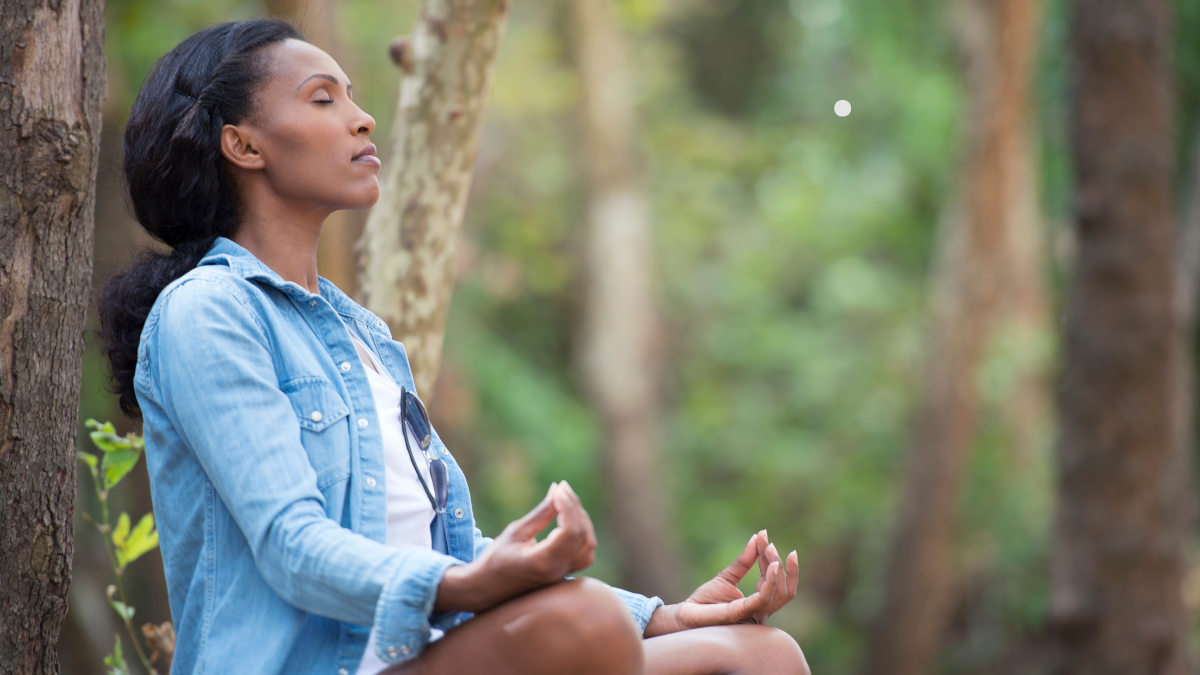
Step 3: Get Into a Good Posture
Posture is important. Sitting well helps you stay alert and focused during meditation.
You can sit on the floor cross-legged, on a cushion, or on a chair with your feet flat on the ground.
Here are some posture pointers:
-
Sit upright but not stiff — relaxed and tall. Imagine a string gently pulling the top of your head upward.
-
Relax your shoulders and jaw.
-
Place your hands on your knees or in your lap.
-
Close your eyes, or keep them softly open with your gaze lowered.
-
Take a few slow breaths to settle in.
You can meditate lying down, but it’s easier to fall asleep that way. If you’re meditating for relaxation or sleep, lying down is fine.
Related: How to Stop Comparing Yourself to Friends
Step 4: Focus on Your Breath
Now we get to the actual meditation part.
One of the easiest and most common meditation techniques is simply paying attention to your breath.
Here’s how to do it:
-
Close your eyes.
-
Bring your attention to your breathing — the sensation of air moving in and out.
-
Notice where you feel it most strongly: your nostrils, your chest, or your belly.
-
Observe the breath without trying to change it.
-
When your mind wanders (and it will), gently bring your attention back to the breath.
That last point is key: notice when your attention drifts and gently redirect it back. Each time you do that, you strengthen your awareness.
It’s like doing a bicep curl for the mind. The moment you realize, “I’m thinking again,” and bring your attention back to your breath, you’ve done a “rep.”
Related: 15 Ways to Make Yourself More Attractive
Step 5: Start Small (Really Small)
A common mistake beginners make is trying to meditate for 20 minutes, getting fidgety and irritated, and then giving up.
Don’t make that mistake.
Start small. Even two to five minutes a day is enough to build the habit. You can always add more time as you get used to it.
Here’s a good progression:
-
Week 1: Meditate 2–3 minutes a day
-
Week 2: Increase to 5 minutes
-
Week 3: 8–10 minutes
-
Week 4 and beyond: 10–15 minutes (or longer if you like)
Consistency is more important than duration. A few minutes every day beats an hour once a week.
If you find it hard to sit in silence, try a guided meditation. There are great apps like Headspace, Calm, and Insight Timer — plus countless free videos on YouTube.
Related: How To Stop Comparing Yourself To Others
Step 6: Expect the Mind to Wander (That’s the Point)
One of the biggest misunderstandings about meditation is that it should feel peaceful and calm.
Sometimes it will. But most of the time, your mind will be active, thinking about this or that — and that’s perfectly okay.
Your thoughts might drift to what you’ll make for dinner, your to-do list, or that awkward conversation you had with a coworker. That’s all normal.
Don’t beat yourself up for thinking. Simply notice the thought — “ah, planning,” “remembering,” or “worrying” — and gently return to your breath.
As you practice, you’ll begin to catch yourself sooner and react less to your thoughts. That’s the skill you’re building: mindful awareness.
Step 7: End Gently
When the timer goes off, don’t jump up right away.
Pause and notice how you feel.
How is your breath?
How does your body feel?
What’s your mood right now?
Notice the quality of your mind in this moment.
Take a few slow breaths, maybe stretch a little, and then carry on with your day.
This helps you bring mindfulness off the cushion and into your life — your work, conversations, chores, and more.
Step 8: Bring Meditation Into Daily Life
Setting aside time for formal meditation (sitting quietly and breathing) is great.
But you can take it a step further by weaving mini-meditations into your day.
Try these ideas:
-
Mindful breathing: Take three deep breaths before replying to a stressful email.
-
Mindful walking: Notice the sensation of your feet touching the ground as you walk.
-
Mindful eating: Eat without multitasking. Notice the taste, smell, and texture of your food.
-
Mindful listening: When someone is speaking, give them your full attention.
Each of these moments strengthens your awareness and helps make mindfulness part of your lifestyle — not just something you “do” occasionally.
Step 9: Be Patient and Kind to Yourself
The benefits of meditation can be subtle, and progress isn’t always obvious.
You might have a session where you feel calm and focused, and another where you’re restless and distracted.
Don’t sweat it — that’s normal.
Here’s a good analogy:
Think of your awareness as the sky, and your thoughts and emotions as clouds passing through it. The sky is always there, even when clouds cover it.
Patience and self-compassion are key. Meditation is a skill that takes time to learn. It rewires deep habits of distraction and reactivity. Give yourself grace.
Step 10: Explore Different Meditation Techniques
Once you have the basics down (breath meditation), feel free to experiment with other styles to see what resonates with you.
Here are a few options:
-
Body Scan: Move your attention through each part of your body, noticing sensations and releasing tension.
-
Loving-Kindness (Metta): Silently repeat phrases like “May I be happy. May I be healthy,” and then extend them to others.
-
Mantra Meditation: Repeat a word, phrase, or sound (like “om”) to focus and calm the mind.
-
Visualization: Imagine a peaceful scene — a beach, a forest, or a soft light — to evoke calm.
-
Open Awareness: Instead of focusing on one thing, simply notice whatever arises in your field of awareness.
Different days may call for different approaches. See what feels right and enjoy the process.
Common Mistakes to Avoid
-
Expecting immediate results: Meditation’s benefits are cumulative, like exercise. Don’t expect overnight changes.
-
Judging your sessions: There’s no “good” or “bad” meditation. Every session is a learning opportunity.
-
Using it only when stressed: Daily practice helps prevent stress, not just manage it.
-
Trying to force relaxation: Let relaxation come naturally. Don’t chase it.
-
Overcomplicating it: Keep it simple — breathe, notice, return.
The Real Benefits (Backed by Science)
Studies have shown that regular meditation can:
-
Reduce stress and anxiety
-
Improve focus and memory
-
Boost emotional resilience
-
Lower blood pressure
-
Improve sleep quality
-
Increase empathy and compassion
But perhaps the most valuable benefit is more subtle: a growing sense of inner stability.
As you practice, you begin to realize that you’re not your thoughts or emotions — you’re the one observing them.
That shift is life-changing.
Final Thoughts
Meditation isn’t about becoming a new version of yourself. It’s about becoming more fully yourself — calm, clear, and present.
Start simple. Sit quietly for a few minutes. Breathe. Notice. Return. That’s it.
Some days it will feel easy; other days, it might feel messy. But if you stay consistent, you’ll gradually uncover a steadiness that’s always been there.
So find a quiet place, take a deep breath, and begin. You don’t have to be perfect. You just have to start — one breath at a time.
Save pin for later.


- 10 Valentine’s Day Basket Ideas - 09/02/2026
- How To Exit Your Lazy Girl Era - 08/02/2026
- 65 Truth or Dare Questions for Adults - 08/02/2026

